
Circular Economy and Remanufacturing as Part of the Mobile Machinery Business
The circular economy for mobile machinery is no longer a vision for the future, but a practical way to enhance competitiveness, reduce environmental impacts, and make more efficient use of the value embedded in existing machinery. When the lifecycle of a machine, single component, or system is considered as a whole, it quickly becomes clear that the greatest potential does not always lie in manufacturing something new. Often, the most significant value can be found in what can be reused, refurbished, upgraded, or remanufactured through a controlled process.
We help our customers identify this potential and turn circular economy objectives into practical solutions. We combine technical expertise, environmental impact assessment, and a business-driven approach to make remanufacturing a profitable, repeatable, and genuinely impactful operating model.
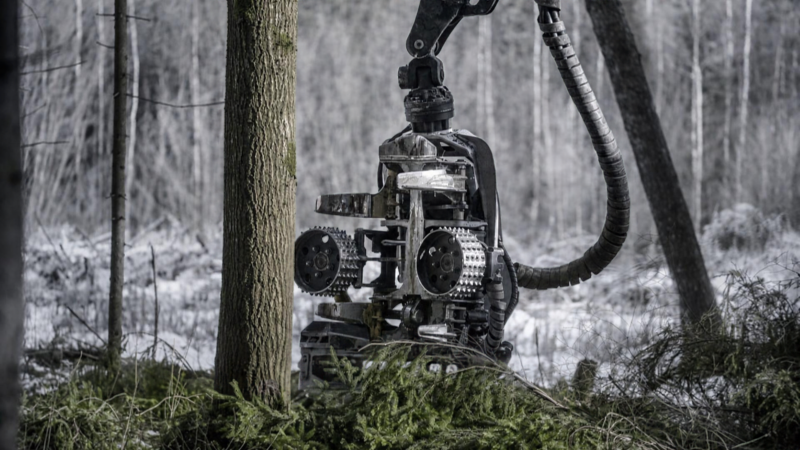
For several years, we have carried out circular economy and remanufacturing projects in which ideas have been taken from the strategic level through practical implementation. One example is a remanufacturing process for a forest machine harvester head carried out in 2024–2025. The project progressed from a circular economy model developed by our expert to a practical pilot, in which the technical feasibility of returning the component to service, the functionality of the process, and the potential for a broader business model were evaluated.
Starting Point and Objectives
- The customer had a strong ambition to develop circular economy practices and integrate remanufacturing into its business. Moving forward, however, required a clear overall understanding, a practical operating model, and information to support decision-making.
- The environmental impacts of forest machines had already been identified through life cycle assessment, providing a solid basis for targeting development efforts at the lifecycle stages where circular economy solutions could deliver the greatest impact.
- Remanufacturing was seen as an opportunity to combine sustainability with profitable business. However, scalable implementation required a more detailed understanding of processes, metrics, suitable products, and the role of the aftermarket.
- The impacts of regulations, directives, and customer requirements needed to be translated into practical actions so that remanufacturing could become a controlled, high-quality, and repeatable part of the business.
Results and Benefits
- The suitability of the harvester head for remanufacturing was assessed from a practical perspective, highlighting both the technical opportunities and the critical aspects that need to be addressed when standardizing the process.
- The project provided the customer with a stronger basis for data-driven decision-making by enabling environmental impacts, costs, technical feasibility, and operational requirements to be considered as part of the same overall assessment.
- The project laid the groundwork for utilizing remanufactured components in the aftermarket and strengthened the understanding of how the circular economy can generate reliable and physical customer value, create new service business opportunities, and provide a long-term competitive advantage.
Circular economy is not achieved through targets alone, but through feasible and well-informed decisions. We help identify the actions that deliver the greatest impact from environmental, business, and profitability perspectives. The result is a clear and documented plan that turns ideas into practical action. – Team Leader, Life Cycle Management & Sustainability, Aleksi Surakka, Comatec.